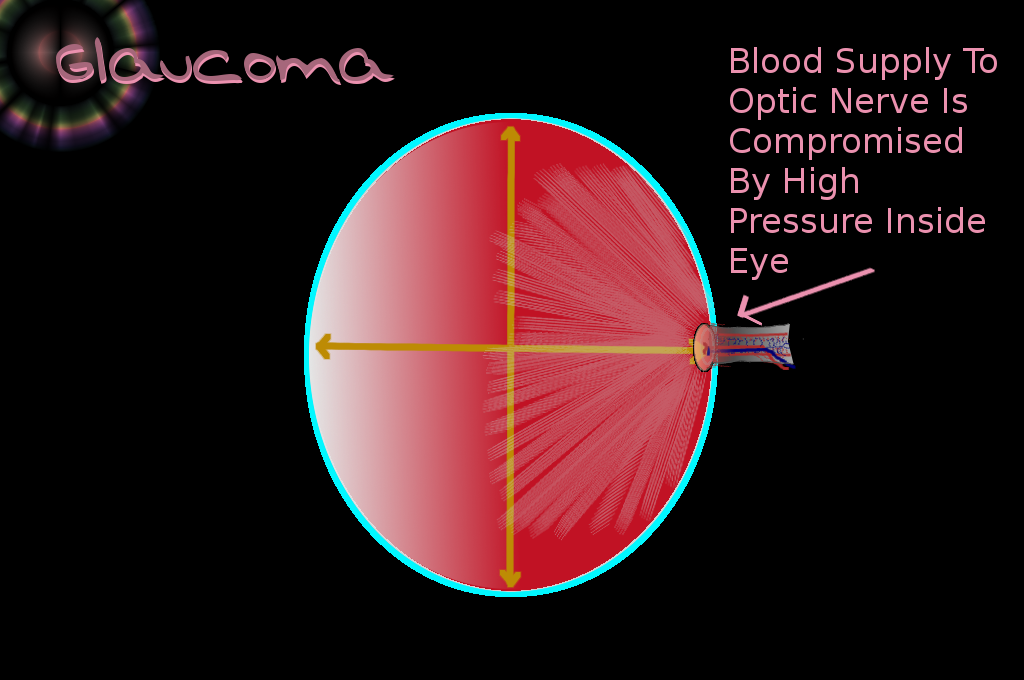
Contact Lens Glaucoma Test

Can A Contact Lens Help Diagnose Glaucoma?


A company called Sensimed is improving the early diagnosis of glaucoma with a “wired” contact lens. One of the dilemmas in understanding early glaucoma detection is testing the eye pressure at the right time. Eye doctors have found eye pressure fluctuates throughout the day and a single reading may yield the pressure at a low point giving a false impression of the state of health of the eyes. That is why patients that are suspected of having glaucoma are often seen by their optometrist at different times of the day to retest the pressure. While this does help in getting a more accurate idea of the true eye pressure, it is not practical to return every few hours in the middle of the night for glaucoma testing, thus the need for something like the new Triggerfish Contact Lens.

Triggerfish Contact Lens To Allow 24 Hour Monitoring Of Eye Pressure

The Triggerfish contact lens system consists of the contact lens, an antenna, and a recording and transmission unit. The contact lens has strain gauges to detect changes in curvature at the edge of the cornea (the clear tissue covering the colored iris).  The changes in curvature correlate with changes in eye pressure. An antenna resembling a patch around the eye is attached for the 24 hour test. This antenna is tethered by a thin cable to a recording device worn on the patients belt. The antenna provides power to the contact lens by induction, a wireless method of transmitting electrical current.

Once the contact lens has been fit to the patients eye curvature, the device transmits data to the recorder for the next 24 hours. Eye doctors have found eye pressure tends to be highest at night, so a 24 hour cycle is important in detecting the highest pressure levels the patient is at risk for developing. After the 24 hours, the patient returns to the eye doctors office and the data is uploaded to a computer by Bluetooth.

Early Detection Of Eye Presuure Prevents Blindness

Early intervention in glaucoma can prevent blindness. Studies have found that some early damage to the optic nerve can be reversed by treatment. The Triggerfish contact lens is currently undergoing clinical trials for the U.S. but is already available in parts of Europe. This is potentially a sight saving test that has been needed for years.

Someday the contact lens you wear for vision correction may have dual functions as a health monitoring device. Beam me up!

Angle Closure Glaucoma From Prozac

Prozac is as common as aspirin today (and probably much safer).  It is in the category of selective serotonin re uptake inhibitors which is a long winded way of saying it makes the molecule serotonin stay around longer instead of being recycled.

This allows a prolonged action of  serotonin, one of the feel good molecules used to treat depression and a variety of other conditions. The eye has numerous receptor sites where serotonin acts, though they are not well understood at this time. Other prescription drugs you may have heard of somewhat similar to Prozac are Paxil, Zoloft, Cymbalta, Lexapro, and  Luvox.

One thing they share in common is a tendency to mildly dilate the pupils. This is rarely a problem, but if you have been told you have” Narrow Angles” or are susceptible to angle closure glaucoma it can be a concern. Farsighted patients (Hyperopic) have smaller drainage angles for the fluid inside the eye to escape back into the general circulation. With age, the lens inside the eye grows and moves forward, further restricting the drainage channels. When you enter into a dark room or movie theater the pupil naturally dilates also. When dilated, the colored tissue known as the iris bunches up it’s outside edges. This thickens it right at the location where the fluid is supposed to drain out. In a normal eye there is plenty of extra space to compensate for this but eyes with narrow angles start to be blocked by the bunched up iris tissue. Eventually, the drainage can be completely blocked and since fluid is  being produced in the eye the pressure skyrockets up.

Normally this results in an acute attack of a very painful, blurry red eye with nausea and headaches. Drugs like Prozac in a rare handful of cases have been known to push this process over the edge and precipitate angle closure glaucoma attacks. While highly unlikely, if you have narrow angles you should be aware of this, since this form of glaucoma is curable with early treatment.

The other possibility from this category of drugs is a transient rise in eye pressure for several weeks (though some cases report drops in pressure). If you have just started Prozac or a similar drug and your eye pressure readings are a little high, discuss this with your optometrist and have the pressures retested in 2-3 weeks. There is usually a return to normal if it is a mild medication induced increase.

A retest in a few weeks could save you money on unnecessary treatment and testing.

Finally, be happy that we have medications that have such better safety profiles than the prior generation.

WP SlimStat